Pure Water Hydration in a Coronavirus Pandemic

A persistent threat to public health continues to evolve with potentially serious implications. COVID?19 remains present in every U.S. state and, according to the CDC, infections are growing or likely growing in 35?states as of mid?September?2026. The dominant strain, known as Nimbus?(NB.1.8.1), accounts for roughly 43?percent of sequenced cases nationwide, while hospitalizations and deaths remain low but rising modestly.
Although the virus no longer drives the mass lockdowns of 2020–2021, experts warn that if future mutations increase its fatality rate, the global impact could be severe. Federal data show about 1,200?weekly hospital admissions and 0.17?percent of emergency?department visits linked to COVID?19.
Infrastructure Impact
A major public?health crisis doesn’t just harm people — it strains the entire infrastructure that keeps society functioning. When large numbers of workers become sick, every essential system begins to wobble. Even in 2026, with COVID?19 still circulating and seasonal surges hitting multiple states, hospitals, utilities, transportation networks, and supply chains continue to feel the pressure of reduced staffing and unpredictable absenteeism.
A significant pandemic wave can disrupt critical public services and create temporary breakdowns in food distribution, electric?grid reliability, water?treatment operations, emergency response, and even public order in densely populated urban areas. These systems depend on two fragile pillars: raw materials delivered on time and skilled employees who know how to keep complex operations running. When either pillar falters — whether due to illness, quarantine, burnout, or supply shortages — the entire structure becomes vulnerable.
The reality is simple: modern infrastructure is tightly interconnected. A health crisis that sidelines a portion of the workforce can ripple outward, affecting everything from grocery shelves to power plants. And as recent events have shown, it doesn’t take a catastrophic mutation to expose those weaknesses — just sustained pressure on the people who make the system work.
Planning for the Treatment of Dehydration
 As part of an overall pandemic disaster survival plan, the role of hydration cannot be overemphasized. The human body can survive for weeks without food but only days without water.
Preventing dehydration ranks highest of all treatments for influenza and many experts feel that preventing dehydration in flu victims will save more lives than all other treatments combined. (Source: Preparing for the Coming Influenza Pandemic by Grattan Woodson, MD, FACP)
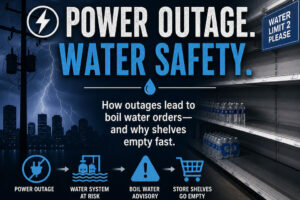
Most family survival plans provide for a sufficient supply of drinking water to last for an extended period in the event that normal drinking water supply is disrupted. Pure water is required for both drinking and cooking. Many estimates call for 1 gallon per person per day for as long as the normal supply is disrupted. (At least two weeks and possibly more).
A good source of bottled water is required since normal supplies will be disrupted.
How to Choose a Water Supplier:
 A family pandemic disaster plan needs to provide for a consistent source of pure drinking water. Tap and well water are unreliable sources during a pandemic and bottled water is considered the best source by many experts.
Purified water, because all minerals and contaminants have been removed, is the purest water and has the longest shelf life of any bottled water. Extended shelf life is important if the pandemic is extended by subsequent waves of infection.
Many believe that distilled/filtered/oxygenated water is the purest, best tasting water with the longest shelf life.
In the event that a pandemic disrupts channels of distribution, avoid bottled water suppliers who source their product from remote springs with long supply lines.
Proper planning will serve to mitigate the effects of a pandemic. Like all disaster planning, a small amount of serious planning is cost effective and good insurance to maintain good health.
Plan for the worst and hope for the best.